Stress tests are commonly used by doctors to evaluate heart health, especially when patients experience symptoms like chest pain or shortness of breath. One of the most common ways to conduct a stress test is through treadmill testing, where the patient walks or runs on a treadmill while heart rate, blood pressure, and other vital signs are monitored. This article will explore the average time on treadmill for stress test by age, helping you understand how age impacts the results and the significance of these tests in assessing cardiovascular health. If you’re also curious about how success in different fields is measured, Danny Go net worth is an interesting example of how financial achievements can be tied to overall well-being.
What is a Stress Test?
A stress test, also known as an exercise stress test or treadmill test, is a diagnostic procedure used to assess the heart’s function under physical stress. The goal is to determine how well the heart responds to increased activity. During the test, a patient walks on a treadmill that gradually increases in speed and incline. Monitoring equipment tracks the heart’s activity to detect any irregularities that may indicate heart disease or other cardiovascular issues. The average time on treadmill for stress can vary significantly, reflecting both physical fitness and heart health.
Aspect
Details
Purpose
To assess heart function and detect heart conditions under physical stress.
Common Type
Treadmill stress test where the patient walks or runs on a treadmill while heart activity is monitored.
Monitored Parameters
Heart rate, blood pressure, ECG (electrocardiogram), breathing, and physical performance.
Procedure
Patient gradually increases treadmill speed and incline while being monitored by medical staff.
Indications
Chest pain, shortness of breath, heart disease diagnosis, pre-surgery heart evaluation, etc.
Duration
Typically lasts between 7 to 15 minutes, depending on the patient’s age, fitness level, and health.
Risk
Minimal for most patients, though it’s not recommended for those with unstable heart conditions.
Outcome
Helps diagnose heart issues, evaluate physical fitness, and determine potential risk of heart disease.
Average Time on Treadmill for Stress Test by Age
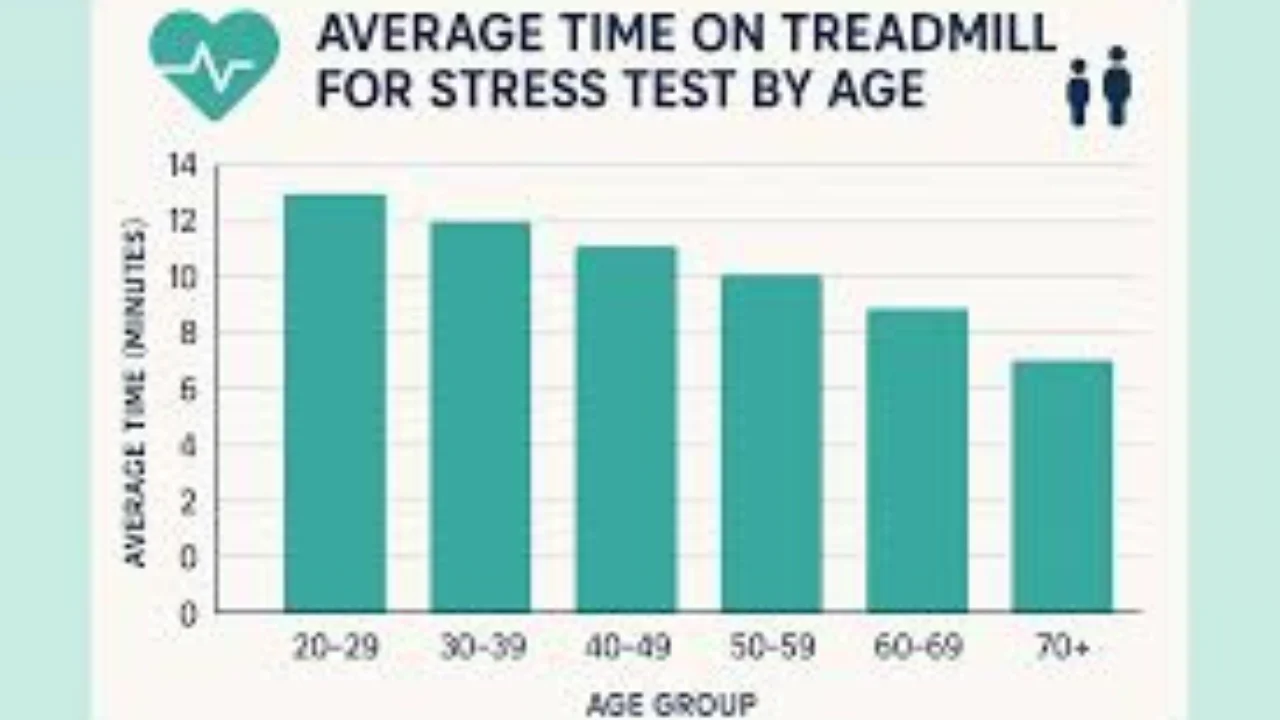
The average time on treadmill for stress test by age typically varies due to factors such as overall health, fitness level, and underlying medical conditions. Generally, younger individuals can endure longer durations on the treadmill compared to older individuals, due to differences in cardiovascular health and fitness.
For individuals in their 20s and 30s, the average time on treadmill for stress can range from 9 to 12 minutes. This group tends to have better cardiovascular endurance and overall fitness, allowing them to perform longer in these stress tests. As individuals age, however, the time they can stay on the treadmill tends to decrease. Those in their 40s may average between 7 to 9 minutes, while people in their 50s and 60s might only last around 5 to 7 minutes, depending on their physical condition. Older individuals, particularly those in their 70s or 80s, may only last 3 to 5 minutes on the treadmill.
It’s important to note that these times are general estimates. The average time on treadmill for stress can fluctuate based on a person’s fitness level, lifestyle habits, and the presence of any health conditions. People who exercise regularly or maintain a healthy diet are likely to perform better in a treadmill stress test than those who lead sedentary lifestyles.
Age Group
Average Time on Treadmill
20s to 30s
9 to 12 minutes
40s
7 to 9 minutes
50s to 60s
5 to 7 minutes
70s to 80s
3 to 5 minutes
How Age Affects Treadmill Stress Test Results
s we age, our cardiovascular system naturally experiences some wear and tear. The heart’s ability to pump blood efficiently may decline, and the blood vessels may lose some of their elasticity. This can result in decreased stamina and performance during a treadmill stress test, which is why average time on treadmill for stress test by age tends to decrease as people grow older. Even public figures who manage busy careers, like those often discussed in topics such as jason alexander net worth, must pay attention to how aging affects overall heart health.
For instance, older adults may experience shortness of breath more quickly than younger individuals due to reduced lung capacity. The increased effort required to keep up with the treadmill’s pace can put additional strain on the heart, potentially leading to premature fatigue. As a result, people over 50 often need to reduce the intensity of their exercise or stop earlier than younger participants.
It’s also worth noting that cardiovascular health is not solely determined by age. Lifestyle factors such as diet, exercise, and stress levels can influence how long an individual can remain on the treadmill. People who have high cholesterol, high blood pressure, or a history of smoking may find their endurance significantly limited, making it more difficult to achieve average times.
Age Group
Average Time on Treadmill
Factors Impacting Performance
20s-30s
9-12 minutes
Optimal cardiovascular fitness, higher stamina, and energy
40s
7-9 minutes
Gradual decrease in stamina, but still relatively good endurance
50s-60s
5-7 minutes
Noticeable decrease in cardiovascular performance and stamina
70s and older
3-5 minutes
Significant decline in cardiovascular health, endurance, and stamina
Importance of Treadmill Stress Tests
Treadmill stress tests play a crucial role in diagnosing heart disease, detecting arrhythmias, and assessing cardiovascular risk. The average time on treadmill for stress provides valuable insights into a person’s heart health. Shorter times or difficulty during the test may indicate potential heart issues that need further investigation.
In many cases, a treadmill test can reveal early signs of cardiovascular disease before any noticeable symptoms appear. For instance, if the heart shows abnormal responses during the test, such as an irregular heartbeat or significant changes in blood pressure, doctors can recommend more tests or treatments to address underlying conditions.
Factor
Explanation
Detect Heart Problems Early
Treadmill stress tests can help detect underlying heart conditions before symptoms appear.
Assess Cardiovascular Health
They provide insight into how well the heart performs under physical stress.
Identify Abnormal Heart Rhythms
The test can uncover arrhythmias (irregular heartbeats) that might not be noticed otherwise.
Monitor Existing Conditions
It helps in tracking the progress of heart disease or treatment effectiveness.
Evaluate Exercise Tolerance
The test reveals how the body responds to exercise, important for assessing fitness levels.
Personalized Treatment
Results can help doctors tailor treatment plans based on individual heart health and fitness.
Lifestyle Factors that Influence Stress Test Performance
Besides age, several lifestyle factors can influence the average time on treadmill for stress. Regular physical activity plays a major role in improving cardiovascular health and enhancing endurance. People who engage in consistent exercise—such as walking, running, swimming, or cycling—are likely to see longer treadmill times, regardless of age.
Diet also plays a significant role in heart health. A balanced diet rich in fruits, vegetables, lean proteins, and whole grains can help lower cholesterol and maintain healthy blood pressure, making it easier to perform well in a stress test.
Lifestyle Factor
Impact on Stress Test Performance
Physical Activity
Regular exercise improves cardiovascular endurance and allows individuals to perform better on the treadmill.
Diet
A healthy diet rich in fruits, vegetables, and lean proteins can improve heart health and stamina during the test.
Weight
Maintaining a healthy weight reduces strain on the heart and allows for better performance during physical exertion.
Smoking
Smoking damages blood vessels and reduces oxygen flow, which can significantly decrease treadmill performance.
Alcohol Consumption
Excessive alcohol can weaken heart function and reduce stamina, making it harder to perform well on the stress test.
Stress Levels
High levels of chronic stress can negatively affect cardiovascular health, leading to poorer performance on stress tests.
Sleep Quality
Adequate rest allows the body to recover, improving overall fitness and performance on the treadmill.
Medications
Some medications, especially those for heart conditions, may either enhance or limit performance based on their effects on the body.
When Should You Get a Stress Test?
The average time on treadmill for stress serves as a baseline, but if you experience symptoms like chest pain, dizziness, or shortness of breath, it’s important to consult a doctor for a stress test regardless of your age. Early detection of heart problems can make a significant difference in the treatment and outcomes of heart conditions.
People with a family history of heart disease, those who are overweight, or those who suffer from high cholesterol or high blood pressure should consider having regular stress tests. It’s always better to be proactive about your heart health, especially as you age.
Condition/Symptom
Reason for Stress Test
Chest Pain or Discomfort
To assess whether the chest pain is related to heart disease or other issues.
Shortness of Breath
To evaluate if the heart is struggling to supply oxygen during physical activity.
Irregular Heartbeat
To determine if heart rhythms are abnormal and need further evaluation.
History of Heart Disease in Family
To monitor heart health, especially if you have a higher risk due to genetics.
High Blood Pressure
To check the heart’s response to increased stress, which could indicate problems.
Overweight or Sedentary Lifestyle
To detect any early signs of cardiovascular issues that may arise due to lack of activity.
High Cholesterol Levels
To assess how your heart functions under stress and if plaque buildup affects blood flow.
Age Over 45 for Men / 55 for Women
As a preventive measure, to evaluate heart health as you age.
Experiencing Dizziness or Fatigue
To rule out cardiovascular problems as a cause of unexplained fatigue or dizziness.
Conclusion
Understanding the average time on treadmill for stress test by age is important for maintaining heart health. It gives you insight into how well your cardiovascular system is functioning and whether any lifestyle changes are necessary. Remember that while age does play a role in your ability to perform during a treadmill stress test, factors like physical fitness and overall health are just as important.
Regular stress tests are a key part of early detection for heart conditions and can provide valuable information about your heart’s function. Whether you are young or old, it’s important to pay attention to your heart health and take necessary steps to stay in shape. Prioritize fitness, maintain a healthy diet, and consult with your doctor regularly to ensure your heart stays strong throughout your life.